
Posts by Steve Cohen
When Sunlight Disappears, So Can Your Motivation: Seasonal Affective Disorder

Did you know that approximately 5% of American adults experience Seasonal Affective Disorder, or SAD? That’s roughly one in every twenty adults whose mood can be seriously affected by changing seasons! And here’s something fascinating: The problem isn’t necessarily the cold. It may be the disappearing sunlight! Welcome to Medvesta Hypnosis Healthcare. Let’s talk about…
Read MoreHypnosis for Weight Loss: Can It Help Change Your Eating Habits?

Volunteers at the National Institutes of Health once joined a study advertised as research into “seasonal changes in vital signs.” Researchers measured their weight alongside other health indicators, keeping the main question out of view: What really happens to our weight around the holidays? The findings, published in 2000, challenged a familiar holiday fear. Among…
Read MoreHypnosis Support for Unwinding and Falling Asleep at Bedtime
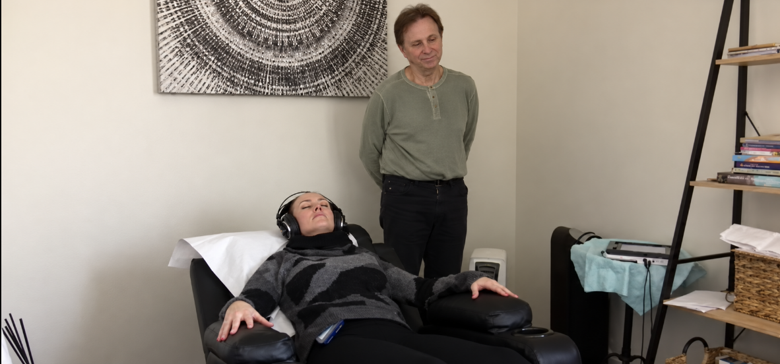
Nearly one in six U.S. adults—15.4%—had trouble falling asleep most days or every day, according to a CDC report published in 2026, based on 2024 data. That is a lot of people lying in the dark, waiting for their brains to clock out. For busy professionals, caregivers, and Healthcare workers, the scene may feel familiar.…
Read MoreThe Woman Who Became Less Afraid of Her Next Migraine

How hypnosis helped my client reduce pain-related fear and improve coping In 1967, neurologist Oliver Sacks wrote the first version of his book Migraine in just nine days. His inspiration came partly from working in a migraine clinic and partly from a medical book written a century earlier. Long before he became famous for Awakenings,…
Read MoreWhen the Day Ends, the Eating Doesn’t: Where Hypnosis May Help

By Steve Cohen Have you ever finished dinner, promised yourself you were done eating, and found yourself back in the kitchen an hour later? That moment deserves curiosity. What prompted the trip: hunger, habit, stress, or the wish for a little comfort? Two recent research reports raise useful questions about weight management and eating patterns.…
Read MoreWhen Fear Turns Up the Pain: How Hypnosis May Help

Before the surgeon made an incision, researchers tried something you might not expect: 15 minutes of hypnosis. In a little-known 2007 clinical trial at Mount Sinai, 200 women preparing for a breast biopsy or lumpectomy received either a brief hypnosis session or a session of supportive listening. At discharge, the hypnosis group reported less pain,…
Read MoreHypnosis and Positive Change: Learning a Better Response

Look closely at the photograph. A man rests comfortably in a recliner. His eyes are closed, his breathing appears calm, and his hands rest naturally across his body. Beside him, a Healthcare professional speaks quietly and deliberately. Nothing dramatic is happening. No swinging watch. No loss of control. No mysterious trance. The photograph captures something…
Read MoreHypnosis and the Mind Body Connection: When the Body Remembers What the Mind Wants to Forget

Understanding Stress-Related Physical Symptoms Through the Mind-Body Connection In 1886, Baltimore physician John Noland Mackenzie placed an exquisitely crafted artificial rose near a woman who experienced severe reactions around real roses. Almost immediately, her throat began to itch. Her breathing became difficult. Her body reacted as though it had encountered the very substance it feared.…
Read MoreWhen the Caregiver Never Clocks Out: How Hypnosis May Help

The Patient Behind the Patient In 2015, researchers in Italy worked with 15 people living with amyotrophic lateral sclerosis—ALS. But behind every patient stood another person carrying a weight that rarely appeared on a medical chart. Twelve were spouses. Three were daughters. The patients received four weekly hypnosis sessions and learned self-hypnosis. Their caregivers did…
Read MoreThe Night Before Surgery: A Hypnosis Approach to Anticipatory Anxiety and Insomnia

In 2018, a patient identified in the medical literature as Mr. LC agreed to something most people would find difficult to imagine: brain surgery during which he would need to be awake and responsive for part of the procedure. At Pierre Wertheimer Neurological Hospital, Hospices Civils de Lyon, in France, his anesthesiologist used medical hypnosis…
Read More