
The Teen Who Conquered Test Anxiety
A real, rarely told story about the mind’s alarm system and how hypnosis helped turn it off.
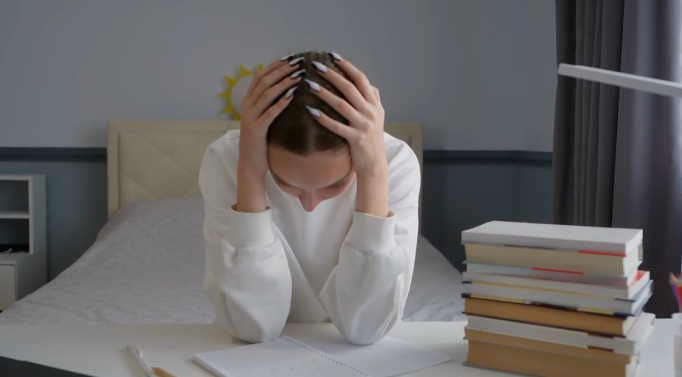
In the early days of our office opening, a 15-year-old girl, identified only as “S.”, came in accompanied by her mother for a problem most adults dismiss until it ruins a child’s life: she blanked out during exams.
Not “I am nervous.” Not “I don’t like tests.” Blank. As in: she studied, understood the material, and then when the test hit the desk, her mind went blank, and her hands shook. Her grades started sliding. Teachers assumed she was not applying herself. Family assumed she needed to try harder. And she assumed something was wrong with her brain.
But we found something surprisingly specific: the anxiety was not just emotional, it was procedural. Her body had learned the test environment as a threat. The classroom. The silence. The clock. The paper. The moment she picked up the pencil. Her nervous system fired the same way it would if she were in danger.
Then we introduced hypnosis not as a stage trick, but as structured, skill-based mental training. The intervention focused on relaxation, imagery, and rehearsal: teaching her body to stay calm while her mind practiced the test scenario without triggering panic. Over time, she stopped blanking out. She could access what she knew. Her performance improved. And the most important change was not her grades; it was her confidence returning.
Why this story matters: It shows that test anxiety is not a character flaw. It is a conditioned response you can retrain.
(Clinical hypnosis for test anxiety and performance anxiety is discussed in medical hypnosis texts and case-based literature, especially around relaxation, imagery rehearsal, and cognitive restructuring—commonly used for anxiety and performance issues.)
The professional insight
Test anxiety is often a false alarm, not a lack of ability
When a teen panics during exams, their body can flip into the fight-or-flight or freeze response. In that state, the brain prioritizes survival over recall.
That is why smart students can suddenly:
-
forget the information they knew yesterday
-
misread questions that they usually understand
-
rush, second-guess, or freeze
-
feel nauseated, shaky, sweaty, or dizzy
Hypnosis (done appropriately) can help because it trains two things at once:
-
Physiology — turning down the alarm system
-
Focus — rehearsing calm performance under pressure
It is basically exposure + regulation + mental rehearsal—packaged in a way teens can actually use.
How hypnosis can help a teen with test anxiety
What it looks like in practical terms
A solid, evidence-informed test-anxiety hypnosis plan often includes:
-
A calm on command cue
A simple anchor (breath + word + gesture) that the teen can use in the classroom. -
Imagery rehearsal (future pacing)
The student mentally practices: walking in, sitting down, reading the first question, staying calm, and retrieving information easily. -
Reframing the internal narrative
Moving from: “If I mess up, I am done,” to: “This is one point where I can work the problem.” -
De-triggering the test environment
The brain learns: test cues ≠ danger cues. -
Post-test decompression
Teaching the nervous system to close the loop, so anxiety does not build with each exam.
A simple tool you can try tonight
The “60-Second Calm Recall Reset” (teen-friendly)
This is not medical treatment. It is a performance skill.
Step 1: Exhale longer than you inhale (20 seconds)
Inhale 3… exhale 5… repeat.
Step 2: Name what is happening (10 seconds)
Quietly
Step 3: Visualize the first 30 seconds of the test (20 seconds)
See yourself calmly reading the first question.
Step 4: Anchor phrase (10 seconds)
Pick one line and keep it short:
Practice this nightly for a week. The goal is to build a familiar pathway your brain can follow automatically on test day.
When to get support
If a teen has panic attacks, fainting, vomiting, severe avoidance, or anxiety that spills into sleep, appetite, or daily functioning, that is a good time to involve a licensed medical professional. Hypnosis can be a helpful adjunct, but it should not replace psychological care.
Reflection question (invite engagement)
If your nervous system had a test alarm, what sets it off most—the clock, the silence, fear of disappointing someone, or the pressure you put on yourself?
If you want, tell me which one and I will help you with a short, hypnosis-style script. Medvesta Hypnosis Healthcare