
Posts Tagged ‘anxiety’
Hypnosis Support for Unwinding and Falling Asleep at Bedtime
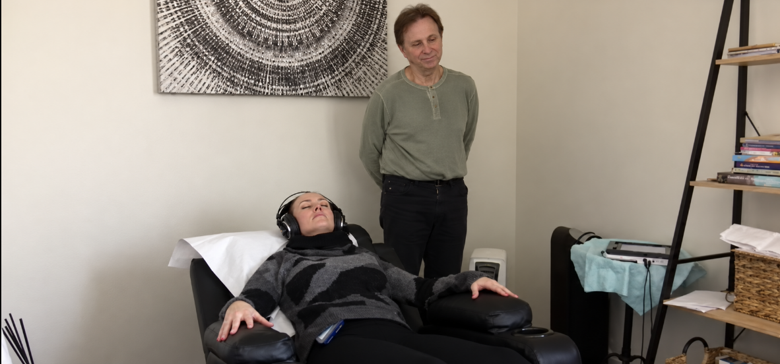
Nearly one in six U.S. adults—15.4%—had trouble falling asleep most days or every day, according to a CDC report published in 2026, based on 2024 data. That is a lot of people lying in the dark, waiting for their brains to clock out. For busy professionals, caregivers, and Healthcare workers, the scene may feel familiar.…
Read MoreWhen the Day Ends, the Eating Doesn’t: Where Hypnosis May Help

By Steve Cohen Have you ever finished dinner, promised yourself you were done eating, and found yourself back in the kitchen an hour later? That moment deserves curiosity. What prompted the trip: hunger, habit, stress, or the wish for a little comfort? Two recent research reports raise useful questions about weight management and eating patterns.…
Read MoreWhen Fear Turns Up the Pain: How Hypnosis May Help

Before the surgeon made an incision, researchers tried something you might not expect: 15 minutes of hypnosis. In a little-known 2007 clinical trial at Mount Sinai, 200 women preparing for a breast biopsy or lumpectomy received either a brief hypnosis session or a session of supportive listening. At discharge, the hypnosis group reported less pain,…
Read MoreHypnosis and the Mind Body Connection: When the Body Remembers What the Mind Wants to Forget

Understanding Stress-Related Physical Symptoms Through the Mind-Body Connection In 1886, Baltimore physician John Noland Mackenzie placed an exquisitely crafted artificial rose near a woman who experienced severe reactions around real roses. Almost immediately, her throat began to itch. Her breathing became difficult. Her body reacted as though it had encountered the very substance it feared.…
Read MoreWhen the Caregiver Never Clocks Out: How Hypnosis May Help

The Patient Behind the Patient In 2015, researchers in Italy worked with 15 people living with amyotrophic lateral sclerosis—ALS. But behind every patient stood another person carrying a weight that rarely appeared on a medical chart. Twelve were spouses. Three were daughters. The patients received four weekly hypnosis sessions and learned self-hypnosis. Their caregivers did…
Read MoreWhy This Breakthrough Method for Stopping Intrusive Thoughts Actually Works Fast

He was not “losing his mind.” He was losing his day. A 37-year-old businessman identified only as “Mr. M” walked into our office exhausted, tense, and trapped in a loop he could not shut off. For over a year, he had been overwhelmed by recurrent intrusive thoughts that something was medically wrong with him. The thoughts…
Read More𝐇𝐨𝐰 𝐃𝐨𝐞𝐬 𝐃𝐞𝐩𝐫𝐞𝐬𝐬𝐢𝐨𝐧 𝐈𝐦𝐩𝐚𝐜𝐭 𝐒𝐞𝐥𝐟-𝐜𝐚𝐫𝐞 𝐢𝐧 𝐭𝐡𝐞 𝐂𝐚𝐫𝐝𝐢𝐚𝐜 𝐏𝐚𝐭𝐢𝐞𝐧𝐭?

Every cardiac condition is chronic and requires you, as the patient, to care for yourself. It is essential to focus on important self-care activities and identify your strengths that will help you improve and identify barriers. Depression is an excellent example of a barrier that prevents you from participating in self-care. A survey from 2019…
Read More𝐇𝐨𝐰 𝐓𝐨 𝐇𝐚𝐯𝐞 𝐚 𝐅𝐮𝐧 𝐚𝐧𝐝 𝐅𝐞𝐚𝐫 𝐅𝐫𝐞𝐞 𝐇𝐚𝐥𝐥𝐨𝐰𝐞𝐞𝐧 𝐖𝐢𝐭𝐡 𝐘𝐨𝐮𝐫 𝐂𝐡𝐢𝐥𝐝𝐫𝐞𝐧

I participated in an event at a school near my home when my daughter was three years old. My role was to wear a mouse costume. During preparation, my wife brought her to meet me and see the rehearsal. When they arrived, I waved and walked toward them, forgetting I was wearing my mouse costume. My…
Read More𝐃𝐢𝐬𝐜𝐨𝐯𝐞𝐫 𝐒𝐢𝐦𝐩𝐥𝐞 𝐓𝐫𝐢𝐜𝐤𝐬 𝐭𝐨 𝐒𝐭𝐨𝐩 𝐎𝐯𝐞𝐫𝐭𝐡𝐢𝐧𝐤𝐢𝐧𝐠 𝐚𝐧𝐝 𝐅𝐢𝐧𝐝 𝐌𝐞𝐧𝐭𝐚𝐥 𝐏𝐞𝐚𝐜𝐞

5 Amazing Uncomplicated Techniques to End Overthinking and Find Mental Serenity Are you processing repetitive, unproductive thoughts directing you toward immobility? Is your mind stuffed with so many ideas that you cannot decide what to do next? If overthinking triggers a battle within you, you’ll be happy to know that you can discover mental peace…
Read More𝐀𝐧𝐠𝐞𝐫 𝐌𝐚𝐧𝐚𝐠𝐞𝐦𝐞𝐧𝐭: 𝐀𝐧 𝐎𝐥𝐝 𝐒𝐭𝐞𝐩-𝐛𝐲-𝐒𝐭𝐞𝐩 𝐏𝐫𝐨𝐠𝐫𝐚𝐦 𝐟𝐨𝐫 𝐒𝐮𝐜𝐜𝐞𝐬𝐬
Anger that’s left unchecked can contribute to many health problems, such as high blood pressure, heart disease, obesity and diabetes. Anger is an action generally with a deliberate action to harm a person or an object. Anger can be physical or verbal ( Anger Disorders: Basic Science and Practice Issues). Anger can be seen…
Read More