
The Firefighter Who Screamed… Then Rewired His Fear of Heights
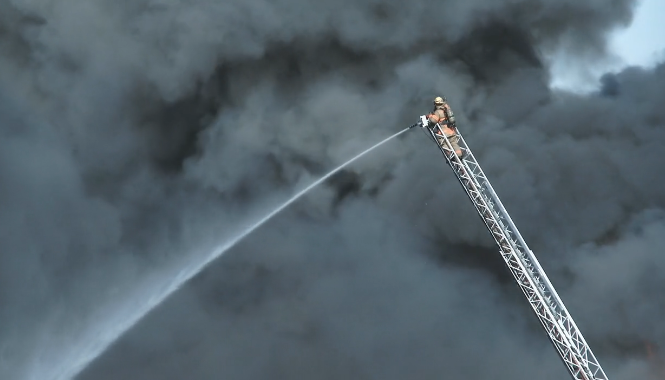
In September 2025, a Texas firefighter named Avion Anderson discovered something he did not expect during mandatory rope-rescue training: a full-body fear of heights. On day one, he climbed and panicked. The videos went public, and millions watched a man in uniform do something most people try to hide: be terrified.
But here is the part most people missed: he did not quit.
Across the training days, he repeated the climbs, practiced being lowered, watched his own footage, and kept going with steady support from his crew. By day four, he was calmer and more controlled, still alert, but no longer hijacked by panic. In his words, firefighters are “human,” and the encouragement helped him push through. ABC7 Chicago+1
That is a real-world snapshot of what evidence-based fear treatment looks like: repeated exposure, safety, skills, and support.
What Actually Happens in a “Fear Response”
A fear of heights (acrophobia) is not “weakness.” It is a protective alarm system that becomes oversensitive.
Common symptoms:
-
Racing heart, shaky legs, dizziness, tunnel vision
-
“I’m going to fall” thoughts even when you’re safe
-
Avoidance (stairs, balconies, ladders, glass elevators)
Avoidance gives short-term relief, but it trains your brain to believe: “I survived because I avoided.” So the fear grows.
Why Exposure Therapy Works (And Why It is the Gold Standard)
Exposure therapy helps you face the feared situation in a planned, safe, step-by-step way until your brain learns something new: “I can handle this.”
That is not motivational fluff; it is how the nervous system updates. The American Psychological Association describes exposure as confronting feared situations in a safe environment to reduce fear and avoidance. American Psychological Association. The UK’s NHS similarly notes that gradual exposure is commonly used within CBT for simple phobias.
Modern exposure also uses an “inhibitory learning” approach—meaning you do not have to feel perfectly calm to learn. You learn that anxiety can rise and still pass without catastrophe.
Where Hypnosis Fits: “Hypnotic Exposure” Done Right
Hypnosis is not mind control. Clinically, it is a focused state in which imagination, attention, and body regulation are easier to guide.
When combined with exposure principles, hypnosis can help you:
-
Lower baseline arousal (breath + body cues) so you don’t flood immediately
-
Practice imaginal exposure (mental rehearsal) before real-life exposure
-
Build a calm anchor (a repeatable cue that steadies the nervous system)
-
Recode the “meaning” your brain assigns to the trigger (“high = danger” → “high = uncomfortable but manageable”)
There’s published clinical work describing successful cases using hypnotherapy combined with exposure (including VR exposure or in-vivo exposure) for phobias.
What Hypnotic Exposure Can Look Like
Not harsh. Not reckless. Just direct and structured.
A typical plan might include:
1) Map your fear ladder (hierarchy)
You rank triggers from 0–10, like:
-
2/10: looking at photos of balconies
-
4/10: standing near a second-floor railing
-
7/10: glass elevator
-
9/10: rooftop edge (safe, supervised)
2) Install the regulation first (so you can stay in the learning zone)
-
breathing rhythm
-
muscle release
-
grounding cue (hand on chest, phrase, image)
3) Hypnotic exposure rehearsal (imaginal + sensory)
In trance, you mentally step onto the “2/10” rung and practice staying present until the spike drops. Then you repeat.
4) Real-world exposure (the real rewiring)
You do the same steps in life, gradually. This is where change becomes durable.
5) Track proof
You document: “I did it. Anxiety rose. Nothing terrible happened. I recovered.” That proof is gasoline for confidence.
“What About Virtual Reality?”
VR exposure is a legitimate option for some people. Research comparing VR exposure to in vivo exposure for acrophobia found that VR can be as effective as real-life exposure, with benefits maintained at follow-up.
Who This Works Best For
This approach is a strong fit if:
-
You are functional—but fear is shrinking your world
-
You avoid travel, balconies, ladders, elevators, and hiking overlooks
-
Your body reacts before logic can catch up
-
You want a plan that is measurable and step-based
Safety Note (Important)
If your fear is tied to severe trauma, dissociation, panic disorder, or complex medical issues that mimic dizziness/vertigo, you will want a clinician who can screen and tailor the approach. Done correctly, exposure is gradual and collaborative, not forced.
If You Want Help
If you tell me:
-
Your fear trigger (heights, flying, needles, etc.)
-
What you are avoiding,
-
how intense it is (0–10)
…I will outline a 7-step exposure ladder and a hypnotic rehearsal script you can use.
Medvesta Hypnosis Healthcare appointment