
When Fear Arrives Before the Needle: How Hypnosis May Help
The First Anesthetic Wasn’t a Drug
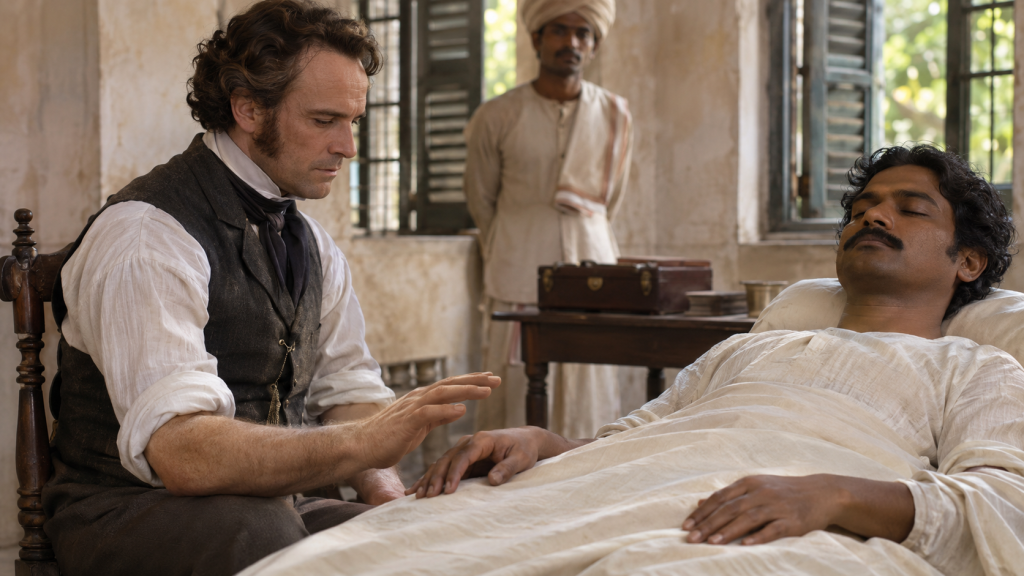
On an April morning in 1845, at a crowded hospital in Hooghly, Bengal, a Scottish surgeon named James Esdaile did something his colleagues considered impossible. His patient was a prisoner with a massive tumor. There was no ether or chloroform. Only a knife, a steady hand, and something most surgeons of the day dismissed as outright nonsense: a trance.
Esdaile had seen something remarkable. Local trance practitioners in Bengal could guide people into a deep, sleep-like state in which they seemed to feel almost nothing. He called the techniques he worked with mesmerism. Esdaile put his patient into that state, picked up his instruments, and operated. The man lay calm and still through the entire procedure.
Over the following six years, Esdaile documented hundreds of major operations- amputations, removals of tumors weighing as much as eighty pounds- performed on patients in trance, without chemical anesthesia. His hospital ledgers recorded a death rate near five percent, at a time when major surgery killed roughly half of the people who underwent it, many not from infection but from the sheer physical shock of pain. Historians note that Esdaile reported his own numbers and advise a pinch of salt, but even his critics agreed: his patients died far less often.
So why have most people never heard this story? Because chloroform arrived a few years later. It was faster, cheaper, and easier, and hypnosis was pushed to the margins of medicine, remembered mostly as a stage act. The lesson of Esdaile’s hospital, though, never stopped being true: the mind can change what the body feels. And in November 2026, one of the largest research reviews ever published on the subject finally put modern numbers behind it.
What Today’s Research Shows
Researchers at Griffith University in Australia just published a systematic review and meta-analysis in the journal Pain: 42 randomized controlled trials involving more than 2,000 children undergoing cancer treatment, spanning 16 countries and four decades of research.
The most effective techniques for reducing pain were hypnosis, distraction strategies, and other mind-body approaches. For pain-related anxiety, hypnosis again rose to the top, alongside virtual reality and similar interventions. Lead researcher Dr. Karin Plummer put it plainly: these approaches “have an important role alongside medicines as part of comprehensive pain care.”
These were children facing some of the most painful experiences in medicine: lumbar punctures, bone marrow procedures, chemotherapy. Hypnosis didn’t cure the cancer, or replace the medications. It changed how the nervous system registered and responded to pain — including the fear and distress that make pain feel worse.
That last part is the whole ballgame. Pain is never just a signal; it’s a signal amplified by attention, tension, and dread. Anxiety turns up the volume. Hypnosis, at its core, is training in turning the volume down.
What This Means for You
You don’t need to be a child with cancer for this mechanism to matter. The same pain-anxiety loop runs through ordinary adult life: the lower back that seizes the moment you wake, the tension headaches, the dread before dental work or medical procedures, the 3 a.m. rumination that never solves anything. It also shows up without any pain at all as chronic anxiety, stress, and habits like smoking that run on autopilot.
Hypnosis gives you a way to step off autopilot. In a session, you learn to enter a focused, relaxed state on purpose, and in that state, suggestions of calm, comfort, and control reach the part of the mind that actually operates the alarm system. It’s a skill you can learn, practice, and keep for life.
A Tool to Try Today
Here is a two-minute version of self-hypnosis you can practice anywhere:
-
Sit comfortably and let your eyes close. Take three slow breaths, with the exhale a little longer than the inhale.
-
Silently count down from five to one. With each number, tell yourself, “deeper and calmer.”
-
Picture a place where you feel completely safe — real or imagined. Notice three details: a sound, a temperature, a color.
-
Give yourself one simple suggestion in your own words: “My shoulders are loosening,” or “My mind is settling.”
-
When you’re ready, count up from one to five, open your eyes, and notice the difference.
Done daily, this is the seed of the skill. Done with a trained hypnotherapist and tailored to your specific pattern of pain or anxiety, it goes much further.
One Question
If the volume knob on your pain or worry could be turned down by even a quarter, what would you do with the room it left behind?
Ready to Find Out?
If chronic pain, anxiety, stress, or a habit like smoking has been running your life, you don’t have to keep white-knuckling it or choose between your medical care and mind-body care. The research is detailed: they work best together.
At Medvesta Hypnosis, we start with a conversation, not a commitment. Schedule a screening or assessment, and we’ll review your history, goals, and questions, and then honestly determine whether hypnosis is the right fit. If it is, we’ll build an individualized plan around your life. If it isn’t, I’ll tell you that, too.
Visit medvestahypnosis.com to schedule your screening today. The first anesthetic wasn’t a drug. It might be time you found out why.