
Hypnosis Support for Unwinding and Falling Asleep at Bedtime
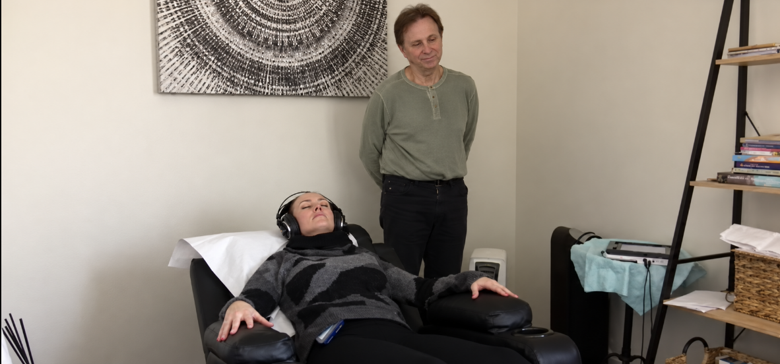
Nearly one in six U.S. adults—15.4%—had trouble falling asleep most days or every day, according to a CDC report published in 2026, based on 2024 data.
That is a lot of people lying in the dark, waiting for their brains to clock out.
For busy professionals, caregivers, and Healthcare workers, the scene may feel familiar. Your body reaches the pillow. Your mind opens a conference room.
Tomorrow’s responsibilities arrive first. Then comes the conversation you wish had gone differently. Somewhere between checking the clock and calculating how little sleep remains, you remember something you forgot to do.
Apparently, your brain has scheduled a staff meeting. Attendance is mandatory.
When your day ends, your mind may need help making the transition.
After hours spent solving problems and responding to other people’s needs, settling down can feel surprisingly difficult. You may be physically tired while still mentally rehearsing, reviewing, and preparing.
That experience can become frustrating. The harder you demand sleep, the more attention you give to whether it is happening.
Hypnosis offers one possible form of support for unwinding while learning.
How hypnosis may help
Hypnosis involves focused attention and increased responsiveness to therapeutic suggestions. A practitioner may use guided imagery and suggestions to help you practice a calmer response to thoughts and physical tension. You remain an active participant in the process.
For someone whose mind keeps returning to unfinished responsibilities, the goal might be learning to notice a thought without immediately turning it into another assignment.
Imagine remembering tomorrow’s appointment and letting that reminder pass without mentally rehearsing the entire day.
Research on hypnosis and sleep offers encouraging findings, but the evidence remains limited by small sample sizes and variability in study quality. Hypnosis may support relaxation; it cannot guarantee sleep or resolve every cause of nighttime wakefulness.
One tip: Picture a closing-time sign
During your evening wind-down, spend two minutes imagining a familiar workspace closing for the day.
Picture the desk, the counter, or the nurses’ station. Imagine placing unfinished responsibilities inside a drawer. Nothing disappears. Everything remains available when it is time to return.
Now picture yourself turning over a sign that reads: “Closed for today.”
When another task enters your thoughts, gently return to that image. You do not have to argue with the thought or make your mind completely blank. Simply rehearse the same message: “I can return to that tomorrow.”
Treat this as a brief relaxation exercise, with no requirement to fall asleep afterward. Its purpose is to practice mentally ending the workday.
Persistent sleep difficulties deserve assessment. Cognitive behavioral therapy for insomnia, or CBT-I, is usually recommended first for chronic insomnia. Hypnosis can be discussed as complementary support within an appropriate care plan.
You spend enough hours being available to everyone else. Giving yourself space to settle is a worthwhile part of caring for your health.
Visit MedvestaHypnosis.com and contact Medvesta Hypnosis Healthcare to discuss whether hypnosis support fits your goals for unwinding and preparing for bedtime.